64. The Purring of the Earth
No, we can't hear it, but we can imagine we do. And just imagining it can work magic.

64. The Purring of the Earth
Jul 12 2026
Did you know that the Earth has a hum? It’s a steady tone, an ultra-low rumbling so deep we can’t hear it—ten thousand times lower than any tones our human ears can hear. It’s so low, and so gentle and persistent, that it’s like a purr going on all the time under our feet.
Yes, the Earth is purring!
Fifty years ago, when seismic detectors started picking it up, the seismologists tried to ignore it. In fact, they tried to delete it from their data because they thought it was mucking up their earthquake measurements. Later they figured out what they were listening to, and it was no longer considered a nuisance. And today it’s a crucial avenue of information. Scientists use the deep hum of the Earth to learn many things, like what the mantle layer is made of and how it moves, and how the crust interacts with the deeper layers of Earth. They use it to study plate tectonics and how weather patterns are changing around the world, and many other things. As one science writer says, “The hum gives us a quiet, almost gentle form of X-ray vision into the planet’s bones.”
What causes the hum?
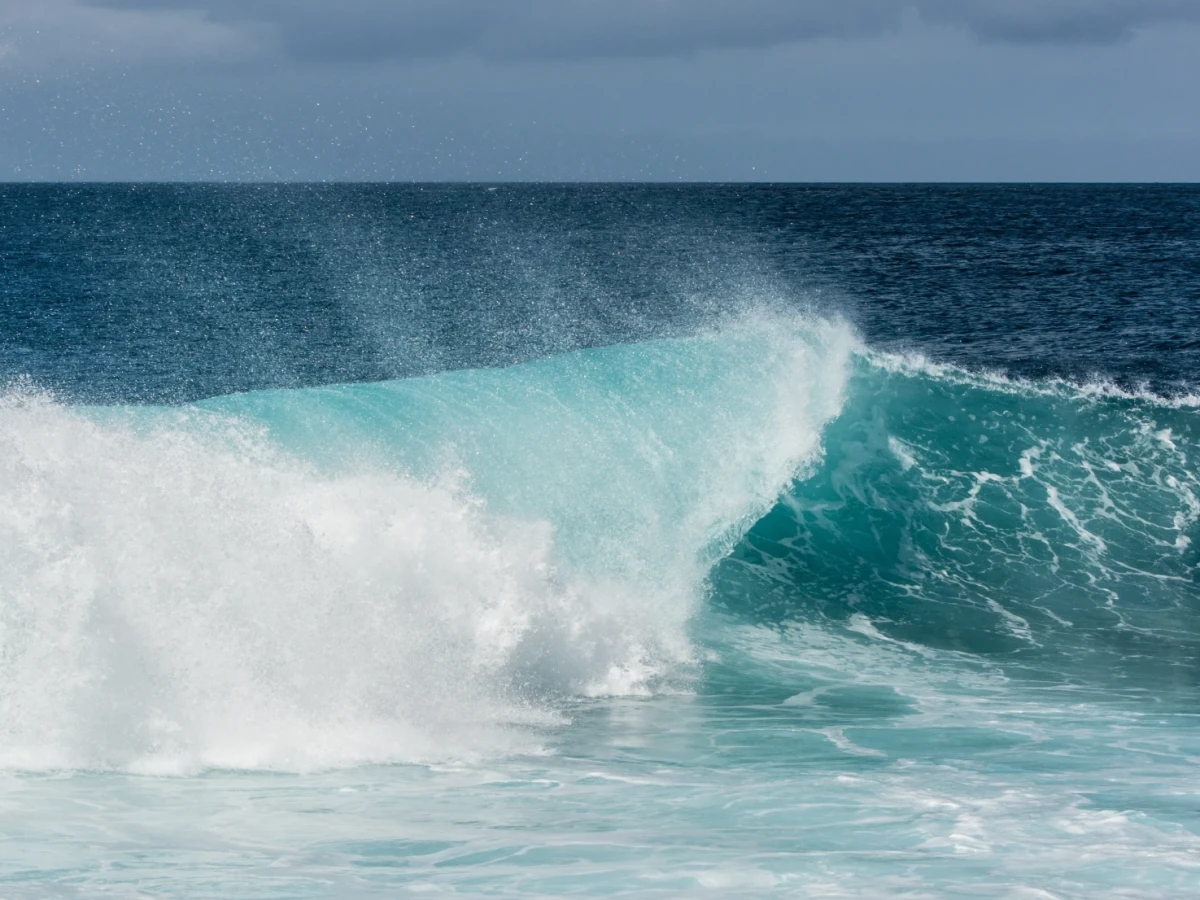
But what causes the hum? Apparently the ocean is one big source. When waves in the deep ocean move across an uneven sea floor, they bump against the ground. Or when they approach an island or a continent, they slosh against the land as it slopes upward. Or when they meet other waves coming from different directions they bump into each other. And each bump and jostle and slosh generates seismic pulses that travel down into the sea floor, down into rock, and then around the world.
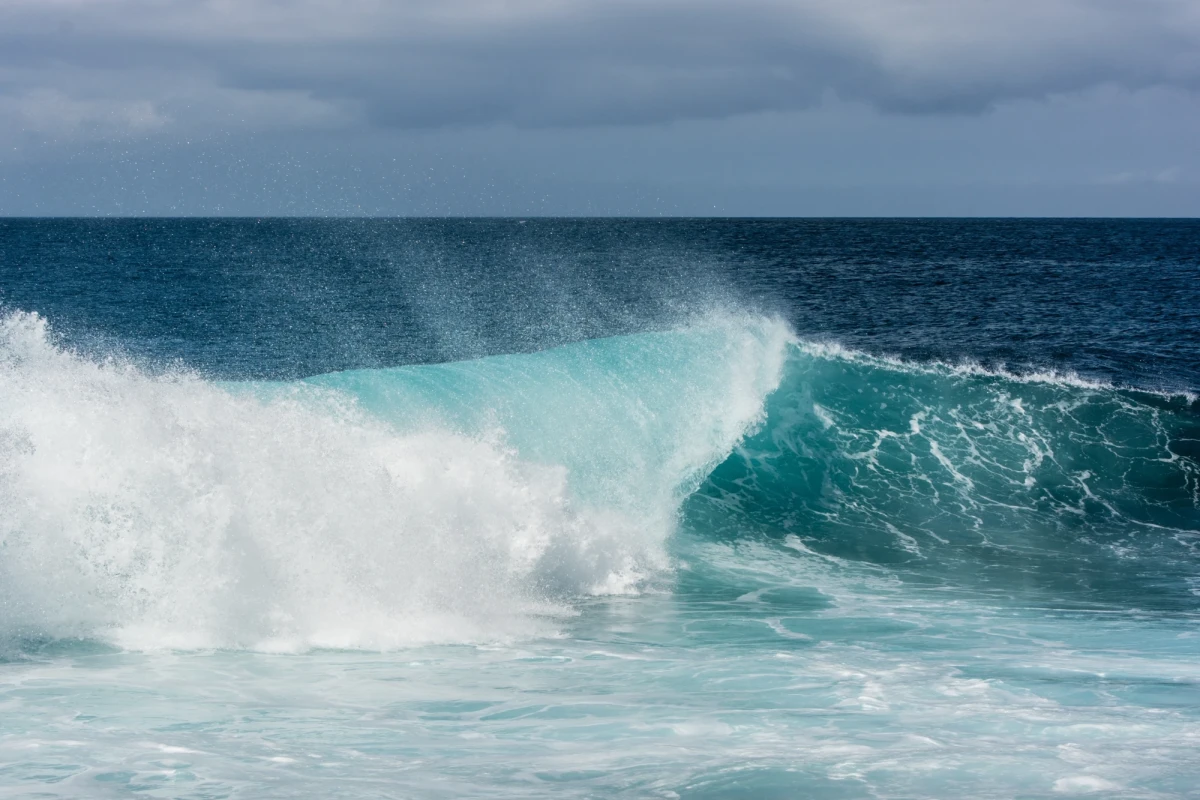
Put all those waves together, bumping and sloshing, and it’s like billions of wave-fingers tap-tapping in the depths.
The ocean is playing the ground like a drum.
And together all the drumbeats add up to a low hum that’s gentle and steady, like the purring of a contented cat. The Earth-cat at rest. The deepest purring imaginable, rumbling around the world.
Experiencing the hum of the Earth
We can’t hear the hum of the Earth with our physical ears, but there are still ways to enjoy it. We can imagine we hear it, for instance. Because the world of the imagination is boundless, right? In our imaginations anything is possible. All it takes is getting a little quiet inside, leaving behind the busyness of the day for a few moments.
I find that meditating on the hum of the Earth is one of the quickest ways to lighten and freshen my heart. If the purring of a kitten can heal bones and repair tissues and lower blood pressure, who knows what the purring of a planet can do inside us? Meditating on the hum of the Earth, especially if I go underwater in my imagination to listen to it, is one of the quickest ways I’ve found to wash away any burdens I don’t need to be carrying. If I’m awake in the night it can help guide me back into sleep. Or if I’m moving too quickly through a day, it can help me slow down to the speed of my body. It’s a soothing and supportive experience.
So today I want to share this meditation with you. Because whose heart doesn’t need a little freshening up?
Why meditation?
If you’re not into meditation, you might wonder: What use is the imagination at a time like this? If we want to change the world, isn’t it more helpful to actually get out there and do something—to put muscle to the job? Not just sit at home feeling good?
But there’s another way to look at it, and years of listening to animals and plants and trees have drummed it into me: Action is necessary, but you can’t do it if you’re depleted.
The world we seek does not happen through continual striving. The animals have a way of moving that is just what the moment needs, and they find that just-right rhythm by resting as often as they can. Their resting gives them the power to spring into action when action is needed. The rest of the time, they relax. They enjoy. They take delight in where they are.
It’s a thing I have to learn over and over—to let go and lighten up. Because opening to what truly delights us builds a foundation in our own experience for the world we seek—for a world that is friendlier and more loving and more livable.
We need to be deeply acquainted with what a livable world feels like in order to help it become real.
A more livable world is one that is friendlier to the Earth, friendlier to the body, friendlier to relaxation and delight. So taking time to delight in the Earth, if only for a few minutes, is by itself a radical act. I find listening to the Earth a deeply delightful experience. So in this kind of listening, we lay the best possible foundation for a friendlier world.
Listening to the Earth, delighting in the Earth, is one way to build that world.
Why the ocean?
This meditation will take us into the ocean. We’re going to visit the ocean to hear the hum of the Earth because the ocean is the source of most of it. Visiting an ocean in our imaginations is also one of the best ways I know to wash our minds and hearts clean and come back refreshed.
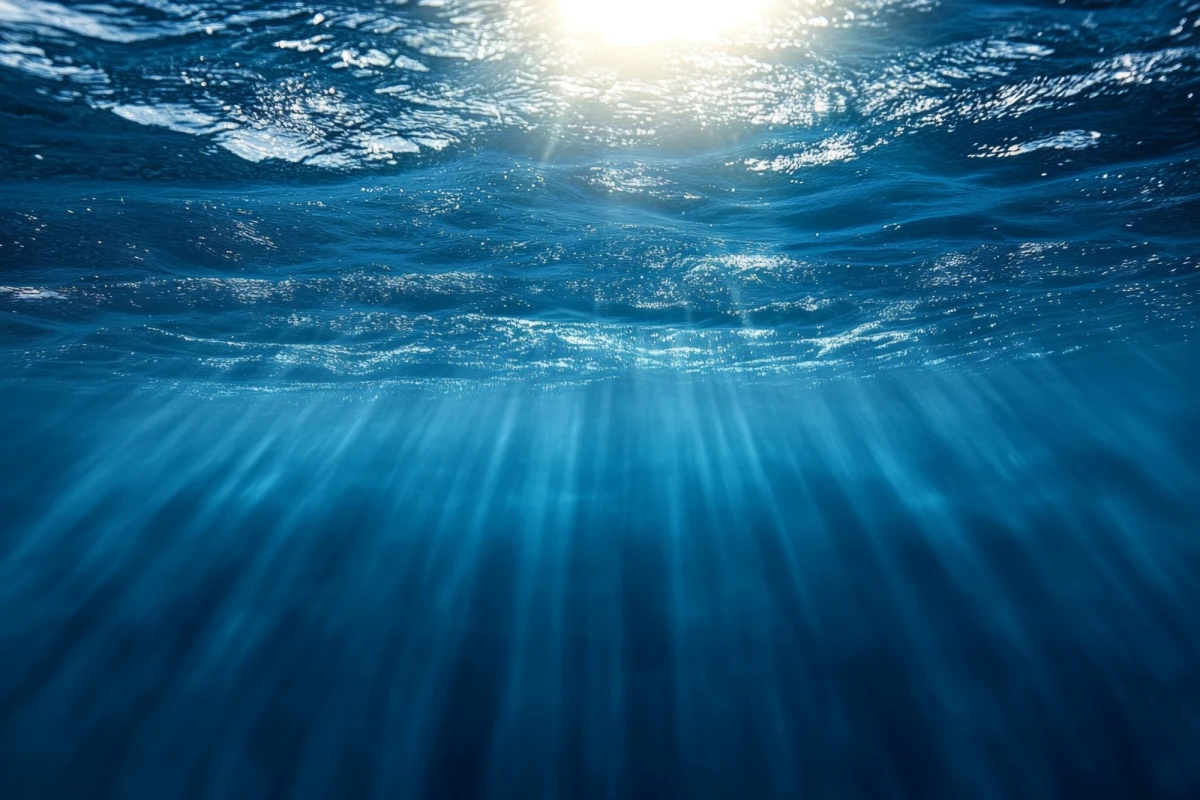
But I’m guessing that most people, when they choose a happy place, don’t choose swimming underwater. More likely they find themselves on a beach or on a boat—on top of the water or beside it. So it can take a little getting used to actually being in the water, even in the imagination, and especially the idea of swimming underwater.
But it’s a place I love to visit—in body as well as in the imagination. Maybe I love the feel of the water so much because of being autistic. At least one study shows that autistic children love swimming more than other kids do. It’s true for me too—I love being immersed in water, I love the feel of moving through water, I love being held by water.
But I have to say very quickly, this is not the same thing as naturally being comfortable in water, because for most of my life I wasn’t. When I was a kid, and even up into my fifties, I thrashed around in swimming pools, feeling awkward and uncoordinated. I was never comfortable learning to swim. But I kept trying anyway, visiting whatever community pool happened to be nearby, practicing, practicing, and practicing some more. I must have really loved water to go to all that trouble for so many years! And finally, slowly, it paid off.
So this is all by way of saying that to enjoy the ocean in our imaginations, we don’t have to be good swimmers. We don’t have to have any water skills at all, in fact. Because the imagination is boundless, right? And anything is possible. When we enter the imaginary ocean, we can swim with ease. And we can go underwater too and breathe there just as easily as on land. The world of the imagination operates by different rules.
So if going underwater, even in a visualization, feels a tiny bit strange, just remind yourself that we’re only having fun here. You will get all the air you need, even underwater.
Or if being in the water is a bit much for you, in this meditation you can also imagine that you are visiting a peaceful place on land—maybe a special corner of a garden or a grotto with overarching trees or sheltering rocks. You might choose a place where you can lie down on the ground comfortably so that in your imagination you are in full contact with the Earth—someplace where you feel fully supported and held. Maybe even someplace where you can experiment with sinking under the ground to explore what you can see and feel below the surface of earth. If you choose to remain on land, as you hear the meditation unfold, and you hear me suggest swimming down through water, feel free to adjust the words to fit your own surroundings. Enjoy what your own imagination is showing you.
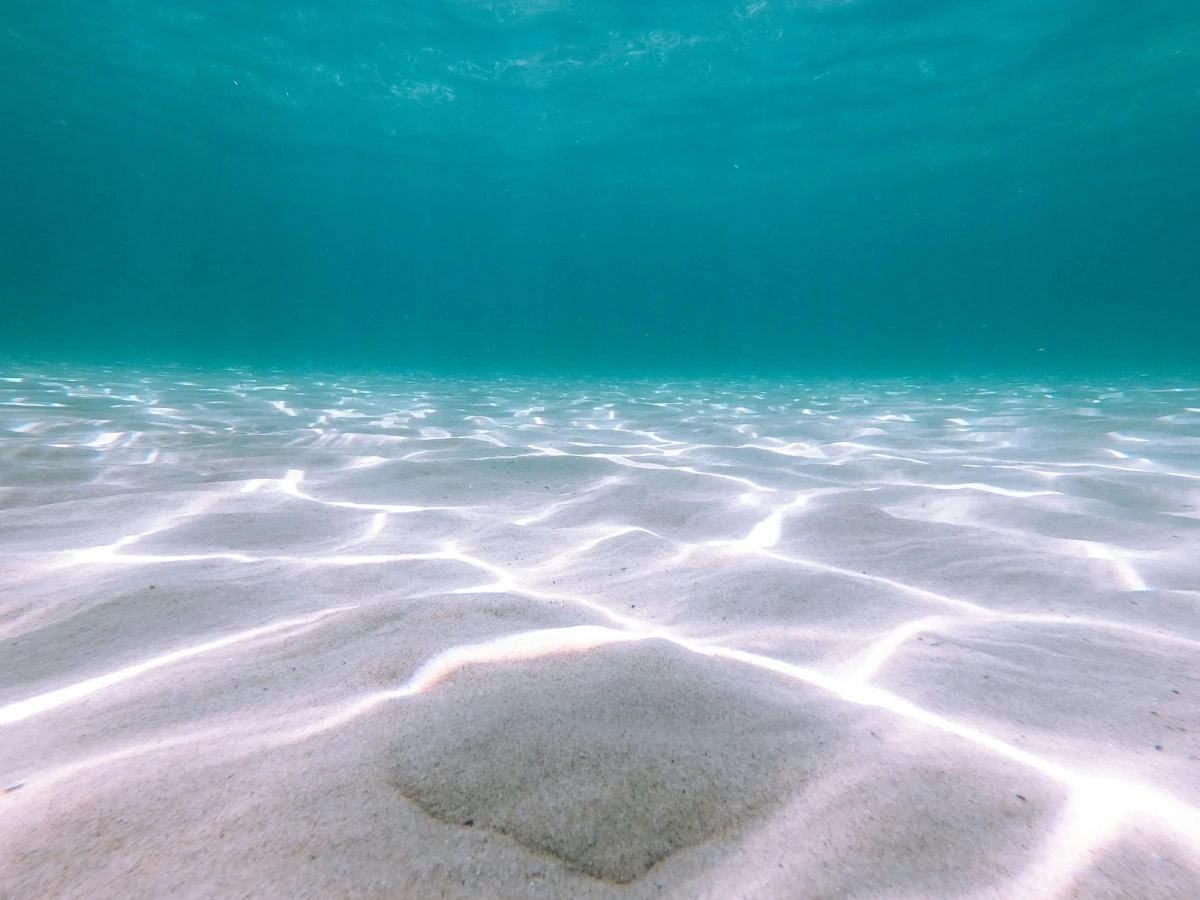
I’ve added a few pictures of the ocean to help set the mood. You can choose one of the photos that appeals to you, and simply let your imagination take you into that place.
And one last thing before we begin: Please do not listen to this while driving! This is the moment to turn off the audio and save it for later. I look forward to reconnecting when you’re back home.
A guided meditation for hearing the hum of the Earth
Once you are ready to listen, you might want to spend a moment getting comfortable. It’s good to sit or lie down in a place that’s soft and welcoming. This meditation is all about feeling ease and support.
I invite you now to close your eyes and feel your body in contact with the Earth, held in solid, full support. You are relaxing into the Earth. Into the hug of gravity, the hug of the Earth.
Let your face relax, the muscles around your eyes relax. Let your jaw rest easy. Your shoulders and hips are loose, at rest. Your legs and feet are relaxed. Your breathing is slowing and opening; maybe you take a deeper breath, or you yawn, and your torso relaxes even further. . . .
Now you find yourself in a beautiful place, a sandy beach next to a calm, deep blue sea. Look around where you are, and notice as many details as you can. Listen to the sound of the waves. The surf today is very gentle, a small ebbing and flowing. Notice the quality of light, the time of day. . . . Let your fingers brush the ground, and notice how it feels. . . .

From the sandy beach, you look out toward the water, and it is so calm today that you’d like to get closer. Your toes dip into the edge of the surf as it curls up gently over the sand. It feels so inviting that soon you want to wade right into the water.
So you move into the water slowly, feeling it cover your feet and touch your legs, and ebb and flow gently around your legs. Notice how welcoming the water feels, just the right temperature. Notice how calm it is on the surface, how inviting. Notice the gentle ebb and flow, tugging you gently back and forth . . . .
Now you push off from the sandy bottom and begin to swim in the water. Maybe you start on the surface and just float on your back for a while. . . . It’s very easy to float here. No effort needed at all, the water holds you up. . . .
The water is so comfortable, and so clear, that soon it draws your attention downward. You can’t wait to explore below the surface. So you turn and swim under the surface, to see what you can see. It’s so beautiful under here! An aqua color near the surface, a little darker blue lower down. . . . Do you see any fish? Are there any animals near you? . . .
Notice how easy it is to breathe under the water. You are safe, and you are held. It feels so delicious! . . .
You decide to swim out further, dive a little deeper, just because it’s so easy. Enjoy swimming freely for a few moments in the water. . . .
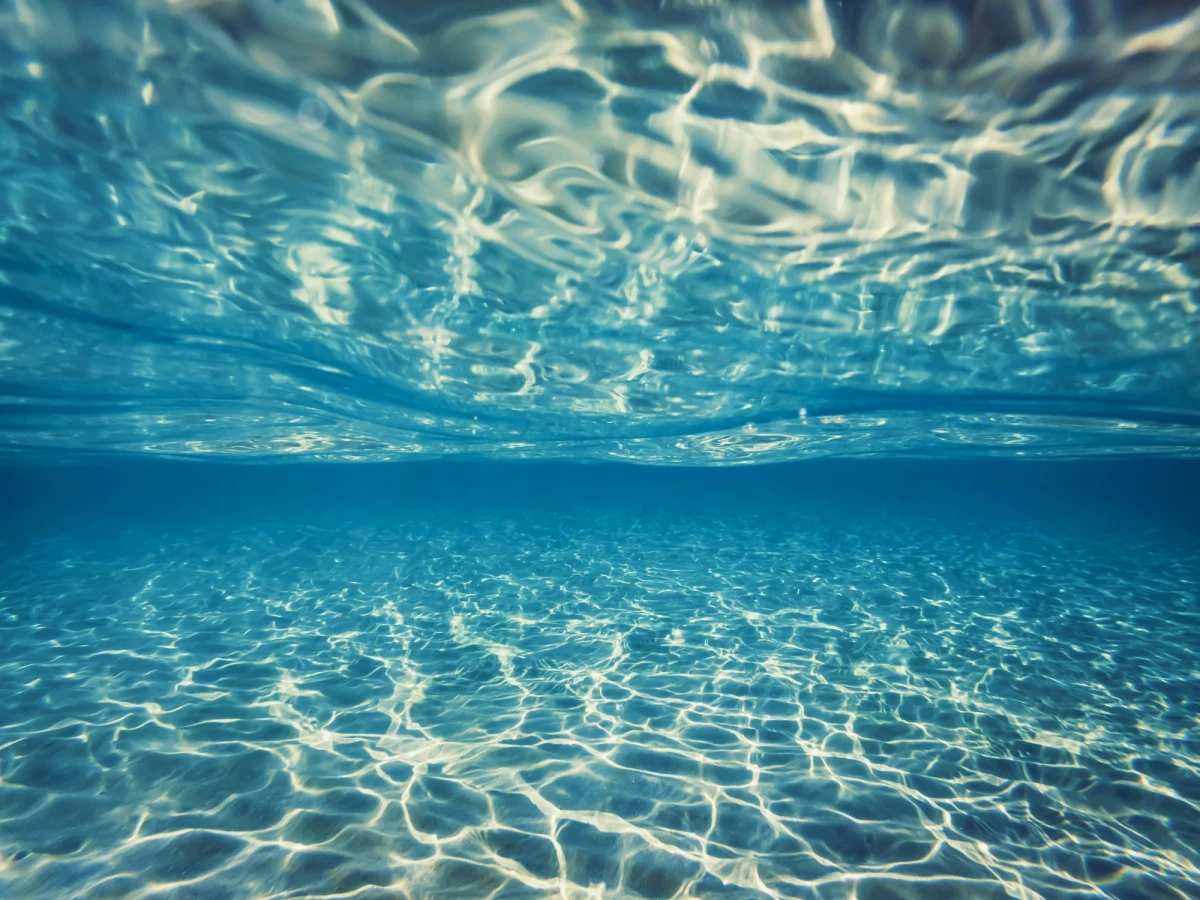
After a while you begin to hear something, a very faint sound. Like a deep hum, very far away. Maybe you hear it, or maybe you feel it. . . . It seems to come from down below you, so you find deeper water so you can get a little closer. . . . .
And as you swim deeper and deeper, the sensation of humming grows. It is gentle, and very, very low . . . like a quiet but sure foundation . . . a soft and reassuring bass rumble, like sitting next to a purring cat, just so much bigger and lower and more powerful. It percolates up, filling the space around you. Like a sound that gently fills in all the blanks. The humming seeps inside you and fills every space. You soak it up. . . .
You realize you are experiencing the singing of a planet, the hum of life carrying on in the oceans, resounding in the deep layers of earth below the sea, percolating around the world. It is firm and sure, and it is peaceful. You feel supported and held. You decide to rest here and enjoy it for a while. . . .
After you have bathed in the hum for a long while, it’s time to turn your attention upward again, toward the surface. You begin to swim upward, up and up. But now that the hum has filled you, you notice that you are moving differently. More deliberate. Easier. You enjoy the feeling of moving with the water. Slowly upward. . . .
And soon you are at the surface again. Your head rises above the water, and you take a breath, and enjoy the feeling of breathing air again. . . .
You spend a few moments floating on the surface, enjoying the feeling of water and air on your skin. Can you still hear the hum? Maybe you can, or maybe you only remember it. Either way, you can take it with you. You carry within you the singing of the Earth. . . . You pause to thank the ocean for sharing one of its treasures with you. . . .
You find that you have surfaced close to the place where you entered the water. When you are ready, you reach the edge and wade out onto the shore. The sand is quiet and welcoming. Maybe you sit for a few moments on the beach, looking out at the water, enjoying the feeling of bringing the gift of the ocean back with you. . . .
Now you take a deeper breath and find that you are in your own room again, in the place where you began. Your body is firmly supported, your feet and legs and spine and arms held by the Earth. Your heart is beating steady and sure, your lungs are working easily, inhaling and exhaling, the rhythm of all life. . . .
You open your eyes and begin to move gently, stretching your fingers and toes, moving your arms and legs. . . .You spend a few moments checking in with all of yourself to see if anything is different. . . .
In a few minutes you will get up and move through the rest of your day. And you will carry one of the treasures of the deep along with you.
Now you know you can go back and visit the ocean anytime you wish. You can fill yourself again and again with the gentle hum of the Earth whenever you please.
Wishing you peace and blessings now and in the days to come.
Namaste.
For diving deeper
For an overview of the science of the hum, see Sumi, “The Earth's Quiet Hum: What Are These Mysterious Vibrations Telling Scientists?” Discover Wild Science, Feb. 13, 2026.
The original paper proposing that ocean waves cause the hum was: Fabrice Ardhuin, Lucia Gualtieri, and Eléonore Stutzmann, “How Ocean Waves Rock The Earth: Two Mechanisms Explain Microseisms with Periods 3 to 300 S,” Geophysical Research Letters, January 14, 2015.
For the scientific studies into the healing power of a cat’s purr, see Elizabeth von Muggenthaler, “The Felid Purr: A Healing Mechanism?” Journal of the Acoustical Society of America 110, no. 5 (November 2001): 2666.
On autistic people loving water: a group of occupational therapists working with children compared the kinds of play that that autistic and nonautistic enjoyed most. They found that the autistic children enjoyed physical activities “significantly” less than the nonautistic kids, but they enjoyed swimming “significantly more” than the others. See Megan Eversole et al., “Leisure Activity Enjoyment of Children with Autism Spectrum Disorders,” Journal of Autism and Developmental Disorders 46, no. 1 (2016): 10–20.
Comments
Leave a Comment