
62. Connecting with Nature's Ways
On a path of nature spirituality, even politics goes through nature
62. Connecting with Nature's Ways
Mar 27 2026
So a few months ago I did a podcast on the voting data from the 2024 election and how analyzing it with statistics1 is showing patterns consistent with fraud, patterns that are not found in fair elections. And the way listeners responded surprised me. More people than I knew are pretty sure there was something fishy about that election.
But more than one person also raised this question: Why would someone like you talk about elections? Isn’t nature spirituality all about love and connecting with the more-than-human world? People are looking for inspiration! And what does connecting with nature possibly have to do with politics?
It’s a fair question! So I want to spend some time with it today.
It has to do with faith
The short answer is that for me it’s all about faith. And how my understanding of faith has changed over the decades.
So I grew up in a conservative Christian environment, where faith had to do with believing the right thing so you could go to heaven after you die. Faith was defined mostly as a mental activity, in other words—holding the correct beliefs.
But then I went to college, where I learned something different. I attended a Mennonite school, Goshen College, where people believed that faith is all about how we live our lives: Whether we practice love, as Jesus did. Whether we put our lives in service of a better world.
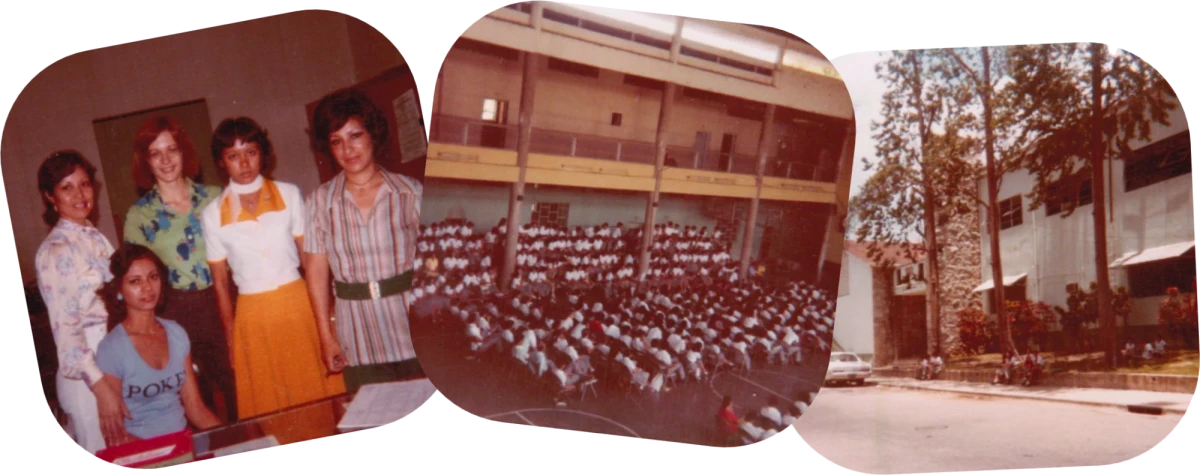
The school lived out this faith partly by requiring students to do one term of international education. They wanted to introduce us mostly white Midwestern students to the world outside our bubble. So they ran study-abroad programs, many of them in the Global South.
My group went to Honduras for three months, staying with host families and speaking Spanish with them. Then for the second half of the term we spread out around the country to do a volunteer job—to give something back to the host country for its hospitality.
I was a music major at the time, so for my service job I was sent to a big high school in another city to help out with music and English classes. And by “help out,” I mean that I was put in charge of a room of fifty or sixty teenagers all at once, but because I knew absolutely nothing about teaching anything—let alone in Spanish—I just pulled out a guitar, sat on the teacher’s desk, and sang American songs to them. The one I remembered best was “Leaving on a Jet Plane,” and the students apparently loved it. They asked for it every time.
Justice is not an add-on
What I learned from all this is that faith is all wrapped up in how we treat each other. That living your faith means showing respect and openness to others. Listening to them and learning from them. And especially learning about inequality, both at home and around the world, and making our own efforts and skills available to address it in some way.
I left college knowing that justice is not an add-on to faith; it lies at the heart of it.
Exploring the seashore
Some years after college I moved to Berkeley, California, for grad school in religious studies, and over the next years I drifted away from the church. I learned to meditate. I visited Zen centers and Tibetan Buddhist temples.
Then in the middle of my doctoral program, I went through several life-shattering losses in a short amount of time, and I lost my bearings. And that’s when I found nature. I began driving an hour north to Point Reyes, to the seashore, where I would spend whole days on the trail or the beach, feeling the wind and listening to surf and learning to identify wildflowers with my magnifying lens and my guidebook.
And nature steadied me. Nature became my go-to solace in the middle of a lonely, breaking-apart life. And slowly my heart began to heal.
But I had no framework for understanding this relationship with nature. I was being stitched together again by oak trees and California poppies and the vast blues of sea and sky, yet I didn’t know how to talk about the healing I was experiencing.

Village values
It wasn’t until I was nearly forty that I began to find ways of putting faith and nature together. And I learned it first from an African couple sent by their village to teach in North America.
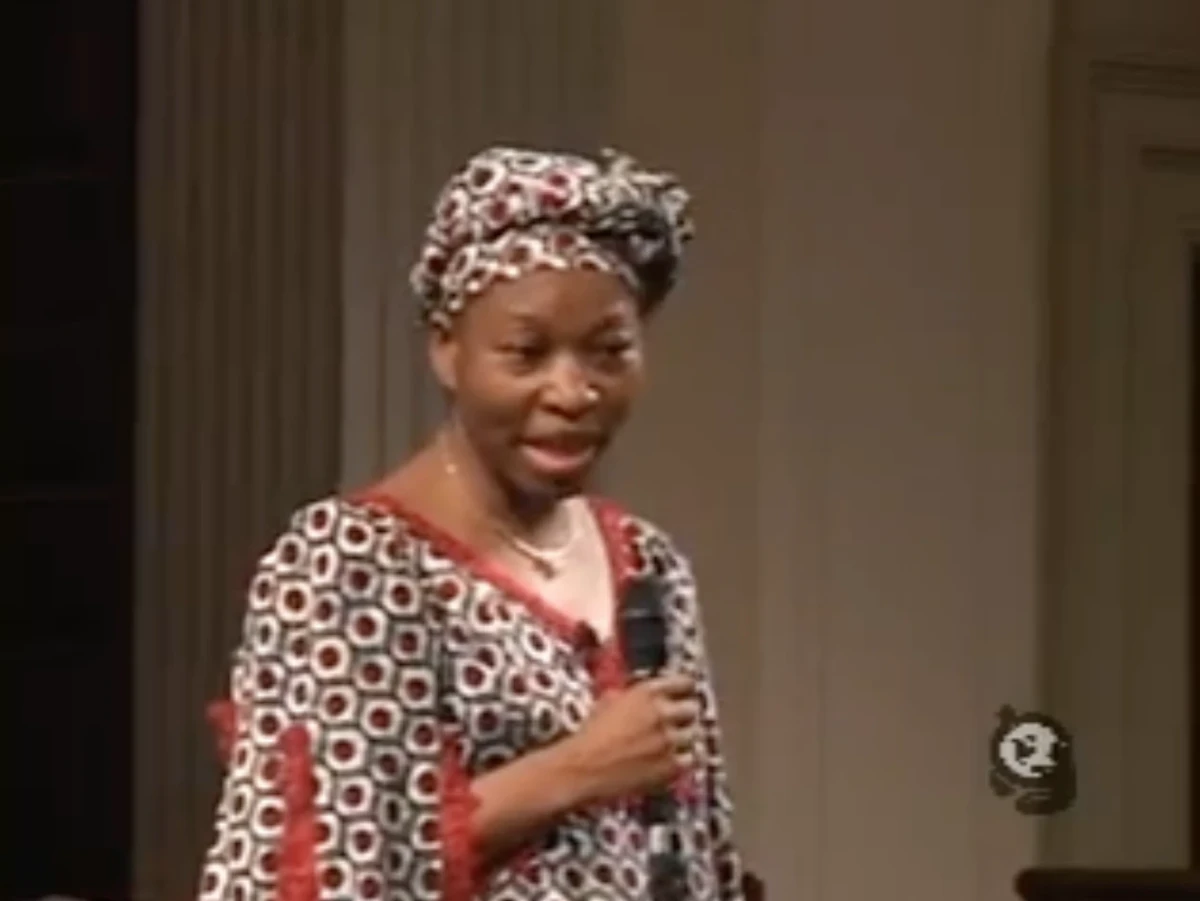
Malidoma and Sobonfu Somé were of the Dagara people of Burkina Faso, and they brought a message from their village.
The elders of their village looked across the oceans and saw that people in the Global North are prone to violence and loneliness and a deep spiritual hunger. It’s an imbalance that makes us run hot and out of control. We live in constant conflict. We make terrible choices. We are burning ourselves up through our own imbalance, and the Dagara elders felt that we are in danger of burning up the whole world along with us.
What a diagnosis! When I first heard it I was dumbstruck. The genius of it!—explaining at the same time both the imbalance within individual people and the imbalance of the whole world system. The Dagara elders laid a big responsibility at our feet: by carrying within us anger and grievance and the urge to control others, we are on a path to burning up the entire world.
And what did they see as the medicine? Nature. Nature is always the medicine. Connecting with nature is how people in the village tame their own aggressions and heal their griefs. And seeking the wisdom of nature together with others is how they address conflicts among themselves, how they heal their relationships and keep the village working in harmony.
So the elders sent Malidoma and Sobonfu to North America to teach village values.
Born with a purpose
I first met Sobonfu and Malidoma during a workshop they led in Oakland, where I was living. That day they spent much of the time talking about one thing: connection. Connecting with nature because nature is the source of healing. Connecting with others because we are lost without a community to receive our gifts.
They explained that in their village, people believe that every child is born with a purpose—a gift that each of us is given to deliver on Earth, something that is urgently needed here. But we all forget what exact gift we are carrying, so we need a community to help us remember. Each of us can grow into our life purpose only when we have a community around us who can see who we are and receive the gift we came to deliver.
In fact, they said, the community exists to help individuals remember their purpose.
I listened, astonished. Some old heavy floodgates in my mind clanked wide open, and fresh water began pouring through—water so full of life, so raging with vitality, it could fill a canyon.
Those waters have freshened my thinking ever since.
Nature and community
Soon after, I was hired to help Malidoma finish writing his book The Healing Wisdom of Africa, and I got to know Dagara philosophy closer up—as an editor, working to “get inside the head” of the writer. For months I steeped in the philosophy of the Dagara, and when at last the book was handed in, I emerged from that job a different person.
The Dagara reinforced what I already knew—that faith, or spirituality, has to do with real living. How we treat others, how we heal our own wounds. How we restore the fresh spirit inside us and among us when we fall out of harmony.
But what I suddenly saw through Dagara eyes was how poverty-stricken we in the Global North really are: we lack a community to encourage our gifts into being, and we lack a connection to nature to guide us toward wisdom.
Because unlike the Dagara village, where the community helps each child grow into their full uniqueness, in my world the community has often had a far different job: to make everyone more alike. To sand off the edges of our individuality so we can all get along—as if harmony comes from being similar.
So groups often build unity through sameness. Which means that when they are in power they often try to make everyone alike.
Authoritarian heritage
This is an authoritarian model of community, according to political psychologist Karen Stenner. She analyzes conservative and authoritarian tendencies across cultures, and she finds that while conservatives may be uncomfortable with change, authoritarians, by contrast, are uncomfortable with difference. In authoritarian communities, everyone has to be alike.
I think back to the land of my ancestors—to the long history of Europe, going back at least to the Roman Empire and maybe further—how neighbors in a town or a region were expected to be similar to one another. How people often viewed differences with suspicion, and how suspicion could erupt into outright violence—into pogroms against Jews or burning witches or beheading heretics. Being different in Europe was often a death sentence.
And this hits close to home. My own ancestors in Bern, Switzerland, were on the receiving end of this treatment. For three hundred years they were periodically harassed and jailed and expelled from their homes—all for the crime of being Mennonite instead of Calvinist. To their neighbors, they were weakening the unity of the community just by being different.
Today, no matter how much Americans long for community, we tend to be suspicious of it at the same time, and for good reason. Long-standing authoritarian habits can all too easily break into the open, as they have in the US today. The authoritarians are now in power, and they want to rid the country of everyone not like them. We are having to struggle now against authorities hellbent on limiting the rights of women and trans people and Brown and Black people and in fact anyone who disagrees with those in power.
This is but the latest moment in a long struggle for sovereignty. Centuries of trying to win autonomy from powerful authorities—from kings and emperors and bishops and popes and lords and fathers. Centuries of having to struggle in order to win the right to live as sovereign people, able to make our own choices.
Americans think of our freedom as having been won a long time ago, but in fact authoritarianism is a whole lot longer, stretching back into white people’s history for thousands of years. By contrast, political liberty is very young; only about 250 years ago did Europeans finally challenge the divine right of kings.
Among the Dagara, I glimpsed a different way of arranging relationships. I saw a society where people did not have to fight to win their freedom from repressive authorities. There was no tension between individual and community because the community was not trying to force its members into any kind of mold. Just the opposite; the community saw its role as guiding each person toward their full individuality. The community helped people remember their purpose. It supported them in growing into their own nature.
Nature is the answer
And this is the other thing I learned from the Dagara: that nature is the source of well-being. That healing and restoration always go through nature. It’s not just that trees are pleasant to look at or visiting a forest helps you clear your mind. It’s that the spirit inside us, the spirit that seeks expression through each one of us, is the same spirit inside all of nature—that nature is its source. And that bringing ourselves back into harmony with ourselves and others depends on bringing ourselves back into harmony with nature.
Nature is not flawed
Through Dagara eyes I saw just how differently my own people view nature. How ingrained it is in us to think of the natural world as incomplete or at least needing improvement. How certain we are that not just the nature around us but especially the nature inside us—human nature—is flawed or broken. I was shocked by the Dagara trust for human nature, their conviction that every person is a gift just as they are. I was awed by their unflagging commitment to giving each other support so that each person can become more of their best and truest selves.
And catching a glimpse of a different way of organizing relationships helped me make sense of the coercive history of my own people. I learned that Europeans were not the only people to view human nature as corrupt and that wherever this idea has been found around the world, it tends to go along with authoritarian ways of governing. Because if we start with the belief that the nature inside us cannot be trusted to be good, then goodness will have to be imposed on us from the outside by the community or by the state.
Through Dagara eyes I glimpsed a friendlier way of living—where people recognize that everyone needs healing from time to time in body, mind, or heart, and the community supports each individual member to remember and act out of their best selves. And where together they seek a wisdom larger than human understanding, a wisdom found in the processes and beings of the natural world.
Connecting with nature’s ways
It’s probably clear by now why I see politics as an inherent part of nature spirituality—and why I hope to keep writing about it. Because in a path of nature spirituality, finding good ways to get along together—that is, politics—means bringing ourselves into harmony with nature. In a path of nature spirituality, every aspect of life, including politics, goes through nature.
Connecting with nature means connecting with nature’s ways.
And domination is not the way of nature. There is no king of the jungle, no queen bee telling everyone else what to do. Nature does not follow a hierarchy. Instead, it follows a circle.
The law of Earth is a circular thing
The way of nature is to live in a closely woven web of interrelations, where everyone’s existence depends on everyone else’s. Where the waste from one kind of being feeds another kind as food. Where everyone is responding, moment to moment, to the movements of others—a shift in the wind or the stamping of bison hooves or the rising swell of the sea. Where everyone takes only what they need and no one can hoard in ways that subtract resources from others.
In the way of nature, each being responds in their own way to the ever-changing conditions of their place on Earth. Each kind of organism has the freedom to unfold according to their own urges. They follow no law written by others; instead, the law emerges from within. It grows from their own likes and dislikes, their own habits and tastes, their own ways of solving the problems of finding food and mates.
The law of Earth is a circular thing, rippling around the community of being. When the grass stretches toward the light, the grazing animals gather to feast. When the rocks tremble, the water finds a new path to the sea. All are moving, changing, responding, continually adapting as they see fit. All are following their own intelligence.
All, in other words, are free.
Sovereignty is the birthright of every being on Earth.

Preserving freedom
Cultures that connect closely with nature try to preserve that fundamental freedom in their relationships with each other. Coercing another being is anathema because it violates the spirit within them, their ability to follow their innate intelligence. In a community seeking to live in harmony with nature, even telling another person what to do is typically considered a grave misstep. It confiscates the wisdom arising within them, the sacred knowing instilled by life itself.
And giving our knowing away—whether to authorities or teachers or professors or gurus who we think know better than we do—is “a crooked thing,” in the words of Ilarion Merculieff of the Unangan people of the Aleutian Islands. “It’s not aligned in harmony with all.”
Most of the systems we live with today teach people to give their power to others. Every social hierarchy trains people to show deference to those higher up. Racism and sexism teach us to give honor to certain physical characteristics and to disparage or diminish others. Capitalism trains us to respect the rich just because they have more and to regard the poor with contempt.
But every one of these systems tramples on people’s ability to hear and follow the wisdom that arises within, the wisdom of nature. All of these systems degrade the spirit. They erase our ability to align ourselves with reality, with the living Earth. They destroy sovereignty.
Because the truth of nature is that no one is better than anyone else. Every being is needed and is worthy of respect. And any system that teaches us to think otherwise is ultimately false; it’s out of line with reality.
In a path of nature spirituality, the everyday spiritual practice is to remember the freedom of each being and to work to structure our lives—and our societies—in harmony with this truth.
In a path of nature reverence, preserving sovereignty is spiritual work.
So I will write about elections
So I hope to keep writing about politics, and especially about elections, because voting is the place where every voice is supposed to count. Where no one is supposed to be better than anyone else.
And any kind of interfering with people’s votes is a direct attack on the spiritual health of the population, whether it’s big money in politics or voter suppression or vote manipulation of any kind. All of these things elevate some voices above others; all of them degrade the spirit. Every impediment to free and fair elections demoralizes people, sapping their will or spirit.
As Americans, we have much to learn from how other countries run their elections, and I hope to write about this soon. Even a quick look at, for instance, Canada shows that our election system is far more vulnerable to shenanigans than theirs is. So it is important to keep our eyes open, to not assume bad things “can’t happen here”—because putting our heads in the sand can also prevent our votes from being counted fairly. I hope you’ll come back again when we talk about how to make our election system more free and fair and secure, and what each of us can do.
But for now, I am wishing you lots of time in nature, to soak up the gifts of budding flowers or singing birds, to feel the cleansing of water or the squishing of mud.
May your spirit remain buoyant and your heart remain free.
1. Using peer-reviewed methods, meaning that other experts in statistics reviewed the methods prior to publication to make sure they were trustworthy.
For diving deeper
You can find more about:
• authoritarianism in the Roman Empire: 37. The Logic of Sameness
• authoritarianism as a form of epistemological abuse: 56. Thirsty for the Waters of Life
• authoritarianism and diversity: 25. Why Doesn’t Everyone Love Diversity?
• a new/old vision for community: 15. Reimagining Community.
Goshen College is still sending students on Study-Service Term, most recently in Ecuador, Indonesia, and Tanzania. Now, almost fifty years since I was there, nearly half of the student body is made up of people of color or international students.
Some years after I met them, Malidoma and Sobonfu Somé ended their marriage and pursued separate teaching paths in North America. Both have since joined the ancestors, Sobonfu in 2017 and Malidoma in 2021. Malidoma’s book continues to offer a wealth of wisdom for anyone interested in living in greater harmony with nature: The Healing Wisdom of Africa: Finding Life Purpose Through Nature, Ritual, and Community (Tarcher/Putnam, 1998). Some of Sobonfu’s talks are still online, and in this ten-minute one she goes right to the heart of how individuals find their purpose in community: “Sobonfu Some: Indigenous Voices,” Earth & Spirit Council, 2011. “Community goes into the nitty-gritty of our human need. . . . Who can see me? Who can accept me? Not just tolerate me but accept me? . . . Healthy relationships are at the heart of every human life.”
Karen Stenner’s research is fully laid out in The Authoritarian Dynamic (Cambridge University Press, 2005). For a short version, check out this essay by Karen Stenner and Jonathan Haidt: “Authoritarianism Is Not a Momentary Madness, but an Eternal Dynamic Within Liberal Democracies,” in Can It Happen Here? Authoritarianism in America, ed. Cass R. Sunstein (William Morrow, 2018), 175–220. That chapter is available for pdf download if you go to Karen Stenner’s home page and scroll down to the Publications section.
Stenner and Haidt identified authoritarian personality tendencies in about a third of the people they sampled across cultures. So they are sometimes interpreted as saying that authoritarianism will always be with us because it’s baked in to the personality of a subset of people worldwide. But this couldn’t be further from the truth. Because the researchers sampled only countries in Europe and North America, and only the white people in each country. So it is more accurate to say that a third of white people show authoritarian mind-sets—which would make sense if authoritarian habits remain stuck in us because of our history.
In Kissed by a Fox I wrote about the tension between individual and community—it’s one of the main themes running through the book, especially the middle chapters. In chapter 4, “Red Foxes,” I explore Augustine’s idea of original sin and how it reinforced the authoritarian power of the church at the very moment when Christianity became an imperial church, taking over the political power of a failing empire. In chapter 5, “Stories We Live By,” I show how this belief in a flawed human nature, originally a religious idea, migrated into secular European thought and influenced everything from the theory of capitalism to Darwin’s interpretation of natural selection, where it undermined our trust in our own ability to cooperate with one another.
My sense that the tension between individual and community that I found in my own culture was not present in African thought was confirmed when I found the work of George Sefa Dei, a Ghanaian-born sociologist teaching anti-racism in Toronto; see “Afrocentricity: A Cornerstone of Pedagogy,” Anthropology and Education Quarterly 25, no. 1 (March 1994).
An official of the Swiss government in 2017 offered a public apology to Mennonites and asked for forgiveness for persecuting the Anabaptists in the canton of Bern. See Tim Huber, “Swiss Official Offers Apology for Anabaptist Persecution,” Canadian Mennonite, Nov. 29, 2017.
Aboriginal communities have worked since their beginning to live in harmony with nature's processes. Aboriginal scholar Tyson Yunkaporta writes that his people fashioned their societies over thousands of years to keep one thought in check: “I am greater than you; you are less than me.” This thought lies at the foundation of all hierarchy. See Sand Talk: How Indigenous Thinking Can Save the World (HarperOne, 2020), chapter titled “Albino Boy.”
The concept of “spiritual degradation” comes from a piece I read while I was beginning to write this episode: Sahaja Serpent, “A Successful General Strike Requires Trauma-Informed Mutual Aid,” Waging Nonviolence, March 3, 2026. Waging Nonviolence is one of my go-to newsletters for hope. Every week there’s so much news you’ve never heard of about people-powered movements and actions happening right now around the world.
Comments
Leave a Comment
This is so full of wisdom, I had to read it twice. Listening to and reading the works of the Somés was deeply perspective changing for me as well. I love how you put Nature and Politics into the same frame. Thank you. I needed this. Audible has one of Sobonfu Somé's books read by her, and it is powerful and wonderful: https://www.audible.com/pd/Womens-Wisdom-from-the-Heart-of-Africa-Audiobook/B00JLJHGE4
Tamara, thanks so much for stopping by! Your comment got lost for a minute, which is why I’m late in letting you know I appreciate it. So you understand what I mean about Sobonfu’s words making a powerful difference. I’m glad to find you.